Skull tattoos range from simple outlines that heal in a week to full-color flames that need touch-ups every few years.
The choice comes down to whether you want the skull by itself or paired with something organic, symbolic or on fire.
A skull on its own carries the weight of mortality, but add flowers, butterflies or candles and it tips toward rebirth instead of ending.
Sugar skulls lean into celebration, a raven or pirate skull brings folklore, and a dagger or flames read aggressive in a way that ages well in bold ink.
1. Day of the Dead Skull Tattoo Drawing
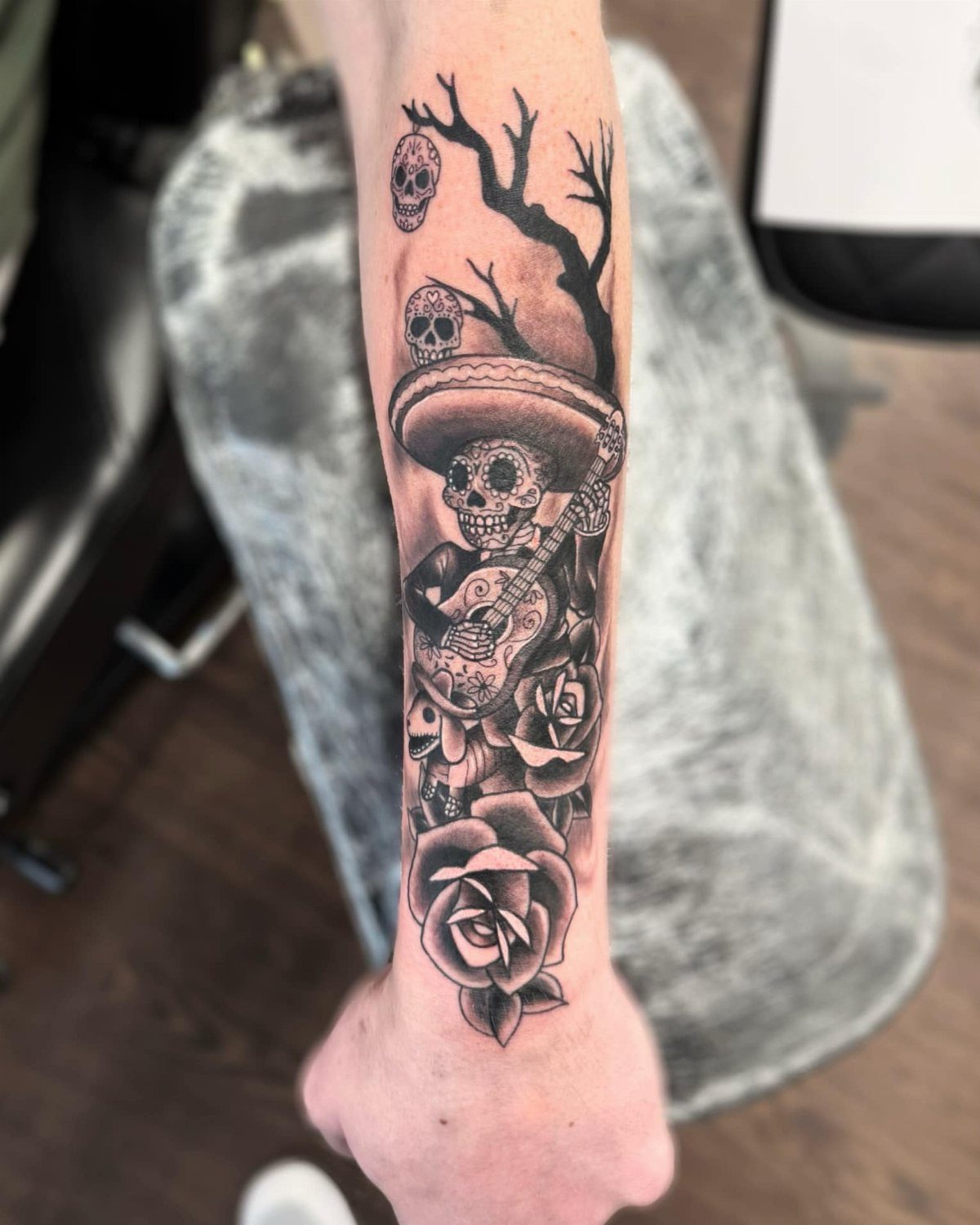
Day of the Dead designs pull from Mexican folk art: sugar skulls, marigolds, celebratory symbols instead of dark imagery.
The skeleton musician, sombrero and roses visible here sit naturally on a forearm because the vertical space lets the figure breathe without crowding.
Black and grey shading keeps the piece readable years out. Color versions exist, but they need more touch-ups as bright hues fade faster than grey wash.
If you want a skull tattoo that celebrates rather than mourns, this direction gives you room to layer in personal symbols without tipping into generic death imagery.
2. Skull Outline & Flowers Tattoo
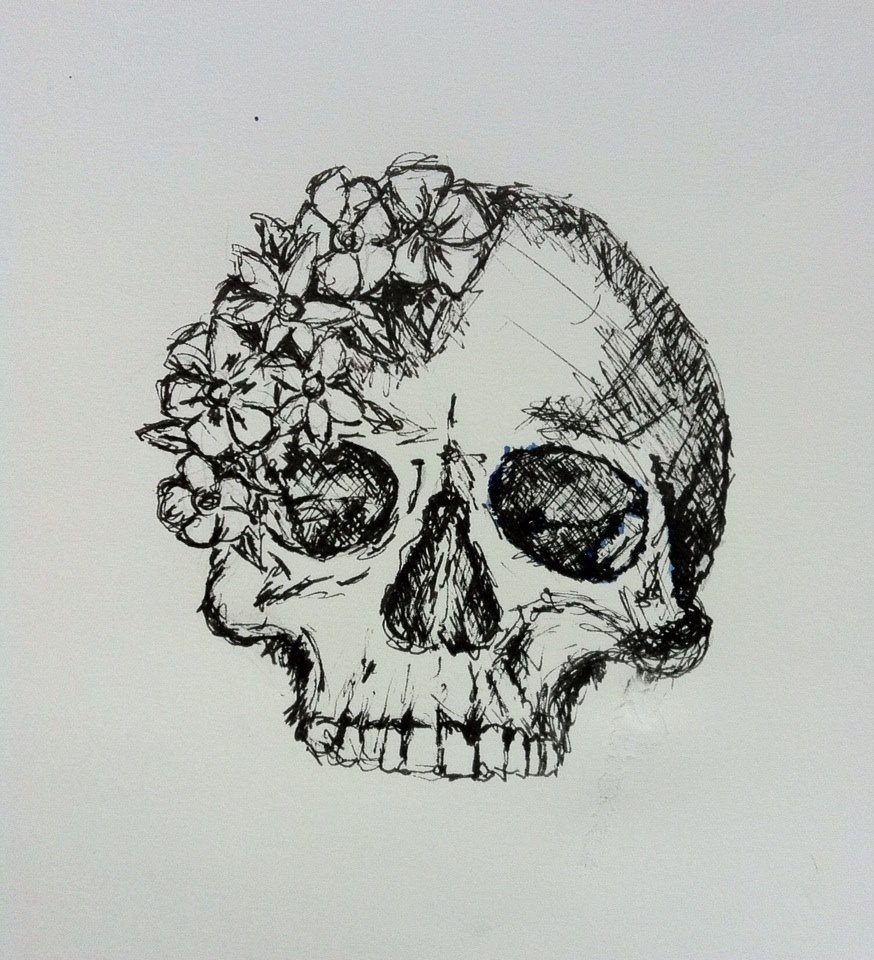
An outline skull trades full shading for simplicity, and flowers soften the memento mori edge. The small blooms sprouting from the cranium turn a reminder of mortality into something closer to growth.
This approach works if you prefer line work over heavy black fill. Outline tattoos heal faster because there’s less trauma to the skin, and touch-ups down the road are easier to match.
The contrast between hard bone structure and delicate petals reads clearly at smaller sizes, so you can fit this on a wrist, ankle or behind the ear without losing detail.
3. Grim Reaper Skull Tattoo Drawing
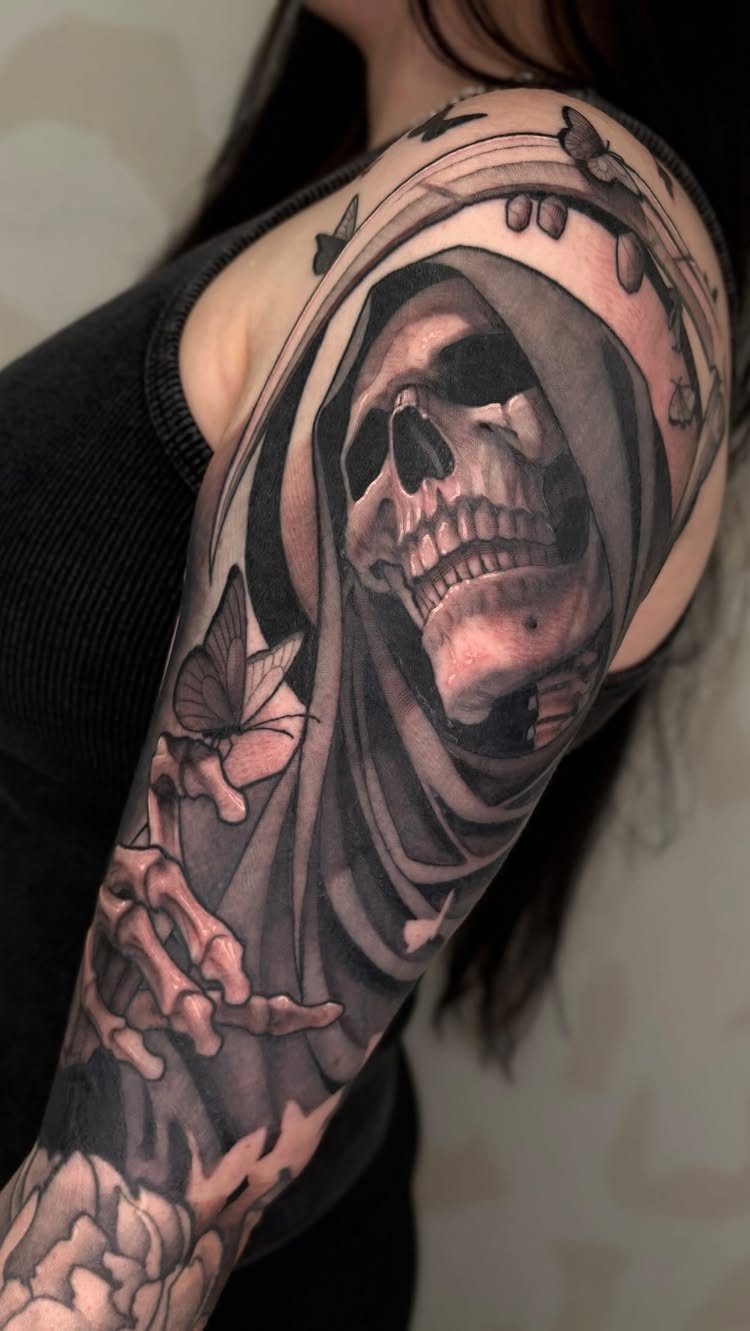
The hood frames the skull without needing the full reaper figure, and butterflies cut the death symbolism with something that moves. The upper arm placement works because the rounded muscle supports the hood’s curve.
If you want a Reaper without the scythe, cloak and full skeleton, the hooded skull alone delivers the idea in less space.
Butterflies balance the weight visually and thematically, though you could swap them for moths, ravens or nothing at all depending on how dark you want the piece to read.
4. Smokey Skull Tattoo
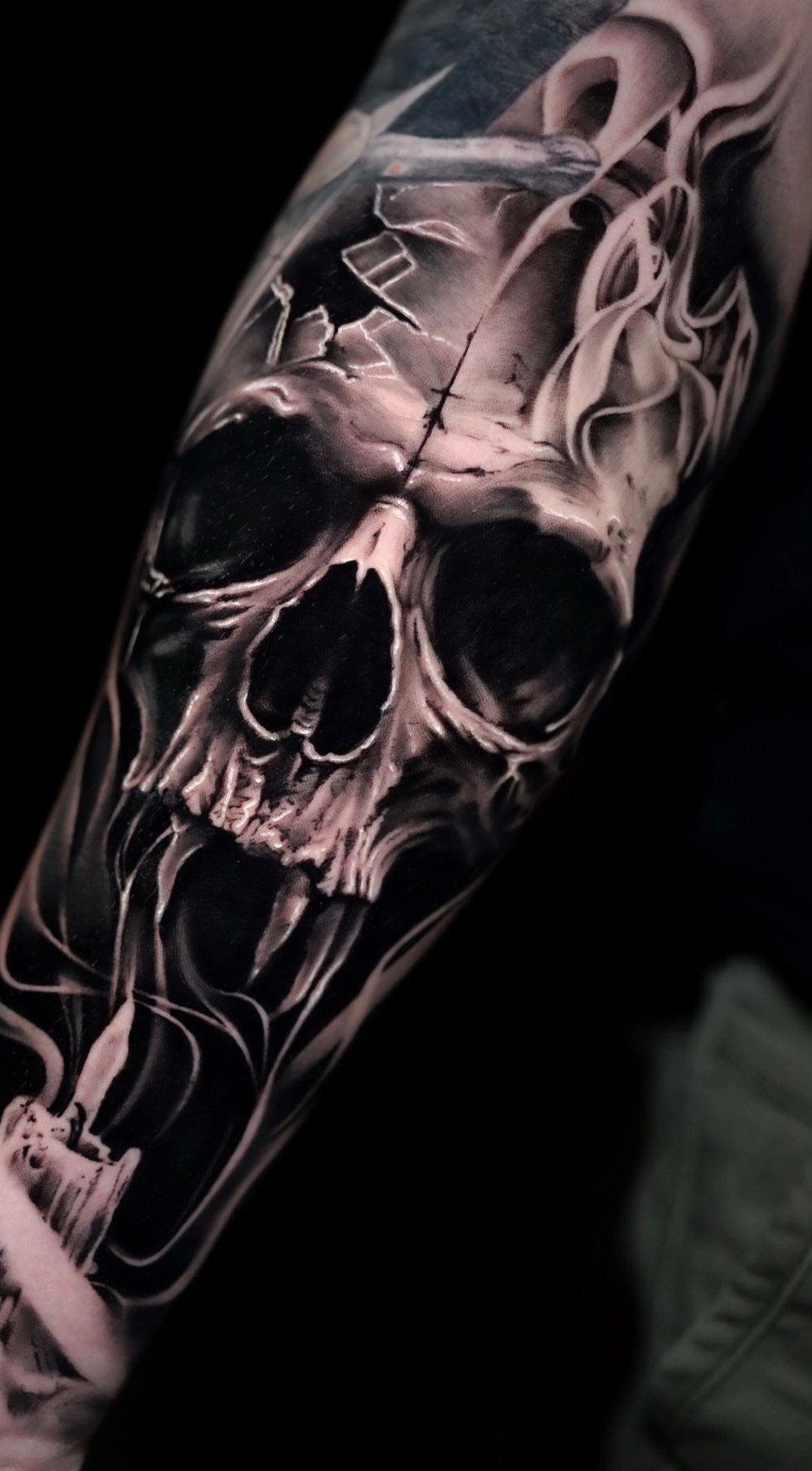
Smoke effects turn a static skull into something that looks like it’s still burning or dissolving.
The swirling grey wash around the bone structure adds motion, and a good artist will use white highlights to make the smoke look translucent rather than flat.
This design asks more from your artist than a clean outline. Smoke shading needs smooth gradients, and if the grey isn’t blended well, the piece reads as muddy instead of ethereal.
The arm gives enough space for the effect to work without cramping the smoke tendrils. If you want atmosphere without adding flowers, daggers or other objects, smoke carries that mood on its own.
5. Pirate Skull Tattoo
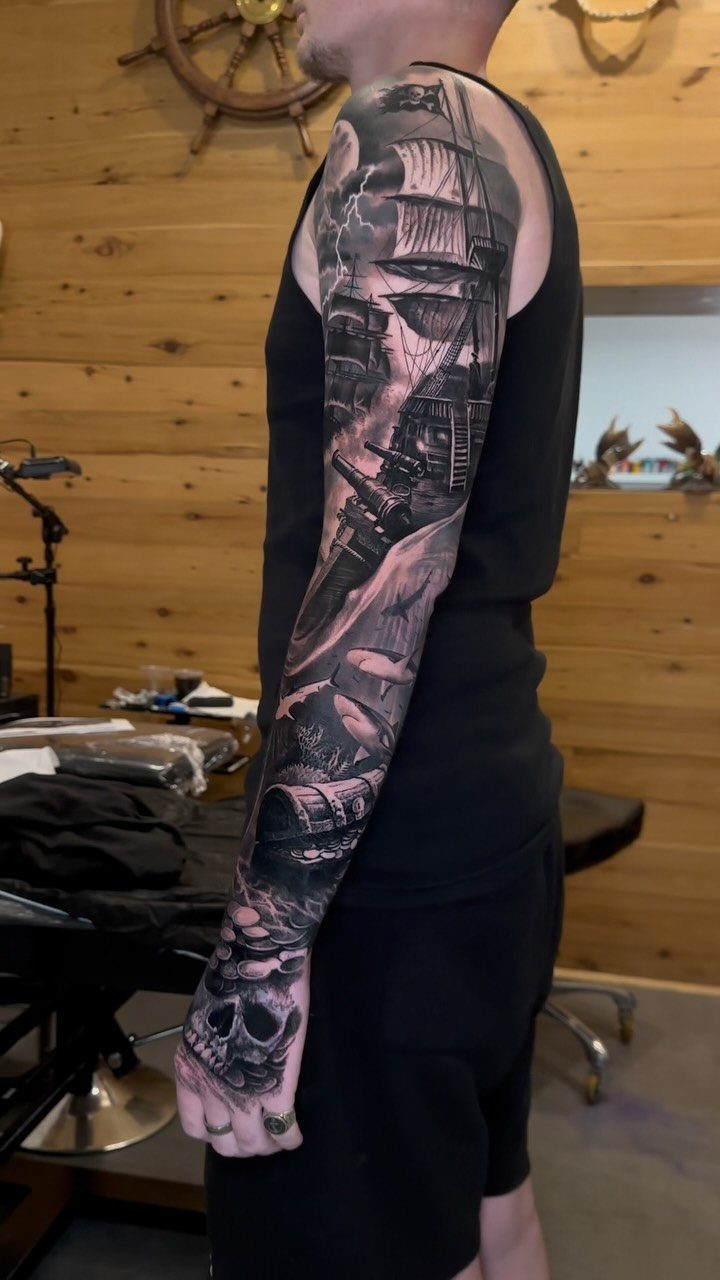
A pirate skull ties to nautical imagery: ships, anchors, compasses, crossed bones. The ship sits on the forearm, the skull on the hand, and this piece was finished over 2 sessions a couple months apart.
Splitting a design across multiple sessions lets the outside heal before you sit for the inner arm, which hurts more.
Hand tattoos fade faster than forearm work because hands see more friction and sun exposure, so expect touch-ups every few years.
If you want a skull with a story, pirate themes give you room to add personal navigation symbols without wandering into unrelated territory.
6. Skeleton with Crown Tattoo
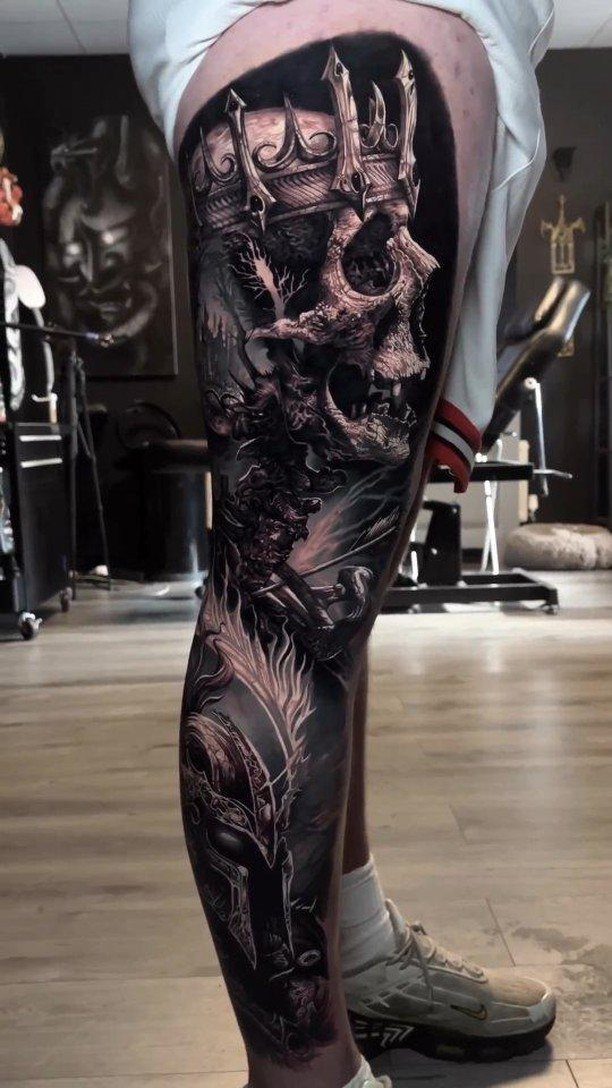
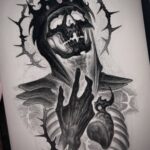
A crowned skeleton signals royalty, power or vanity outlasted by death. The full leg placement gives you vertical space for a standing or seated figure, and the gothic shading visible here keeps the tone somber rather than playful.
Leg tattoos hurt less on the outer thigh and calf, more over the shin and knee. A full design like this takes multiple sessions, and you’ll need to avoid tight pants and direct sun while it heals.
If you want a skull that makes a statement about status or mortality, the crown does that work without needing a banner or script to explain it.
7. Skull & Raven Tattoo
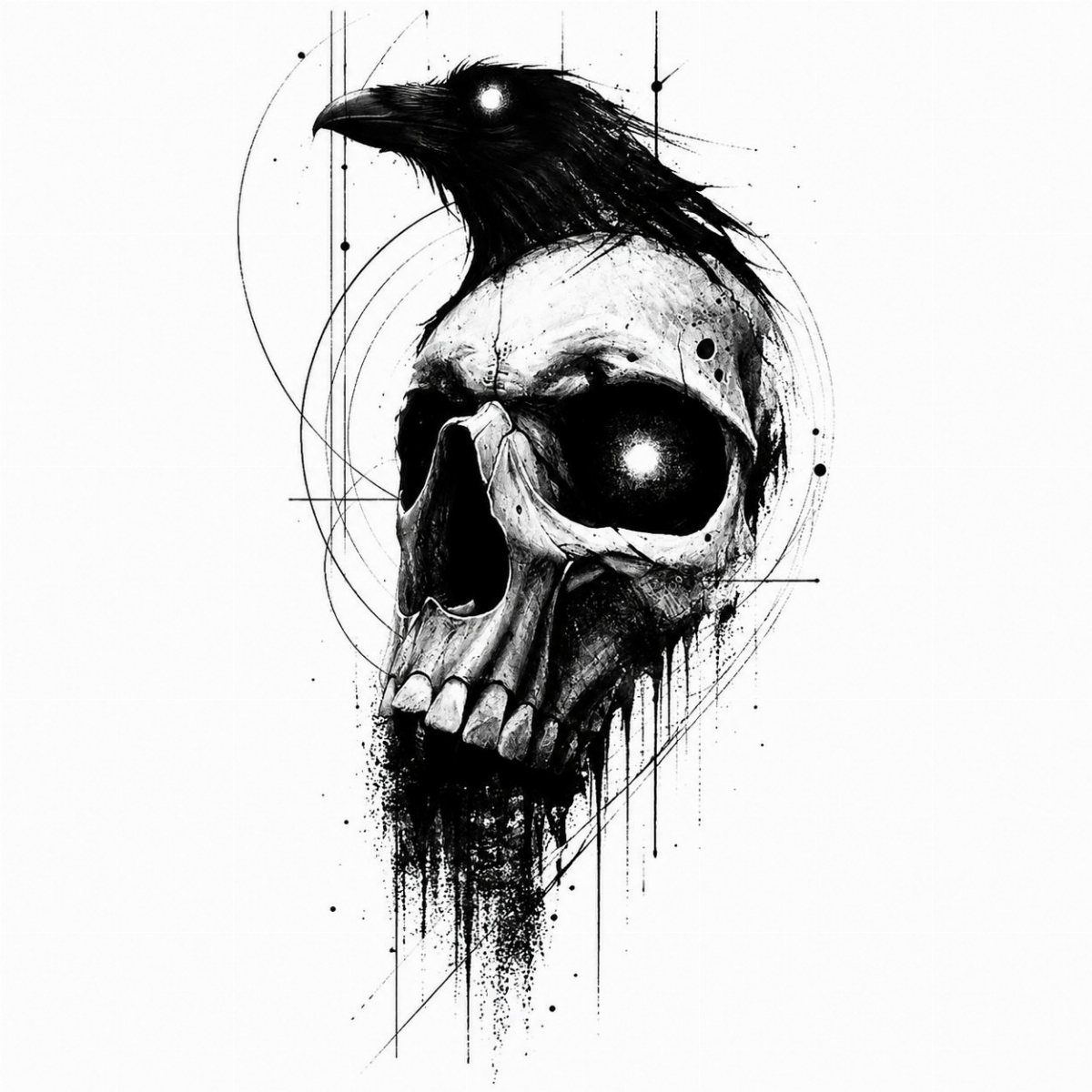
Ravens sit on skulls in artwork as companions to death, and the pairing reads clearly in black ink without needing color.
The bird adds motion to an otherwise static skull, and the ink splatter effect visible here loosens the composition without turning it abstract.
Splatter shading takes skill to place right.
Done well, it looks intentional; done poorly, it looks like the artist lost control. If you want a skull with gothic symbolism but prefer something other than roses or flames, the raven delivers that mood on its own.
8. Skull Candle Holder Tattoo
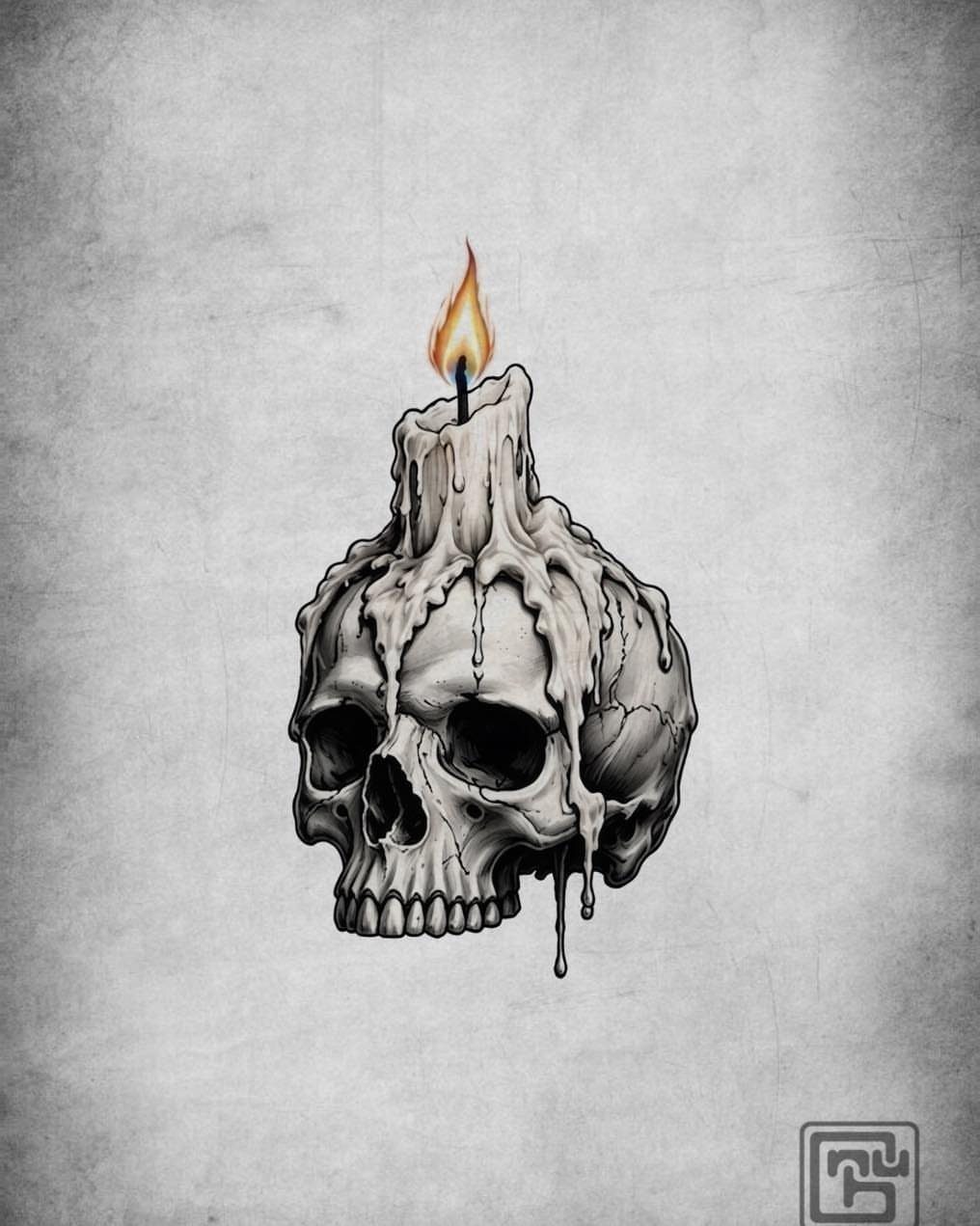
A candle melting over a skull turns the bone into a functional object, and the lit flame gives the design a focal point. The dripping wax adds texture and motion, and placing the flame on top keeps the composition balanced.
This design asks for smooth gradient work in the wax drips.
If the shading isn’t soft, the wax looks hard instead of melted. The lit flame can be done in yellow and orange or left as grey wash with white highlights, depending on whether you want color in the piece.
A skull holding something functional rather than paired with an animal or weapon reads as more surreal than symbolic.
9. Skull with Roses Tattoo
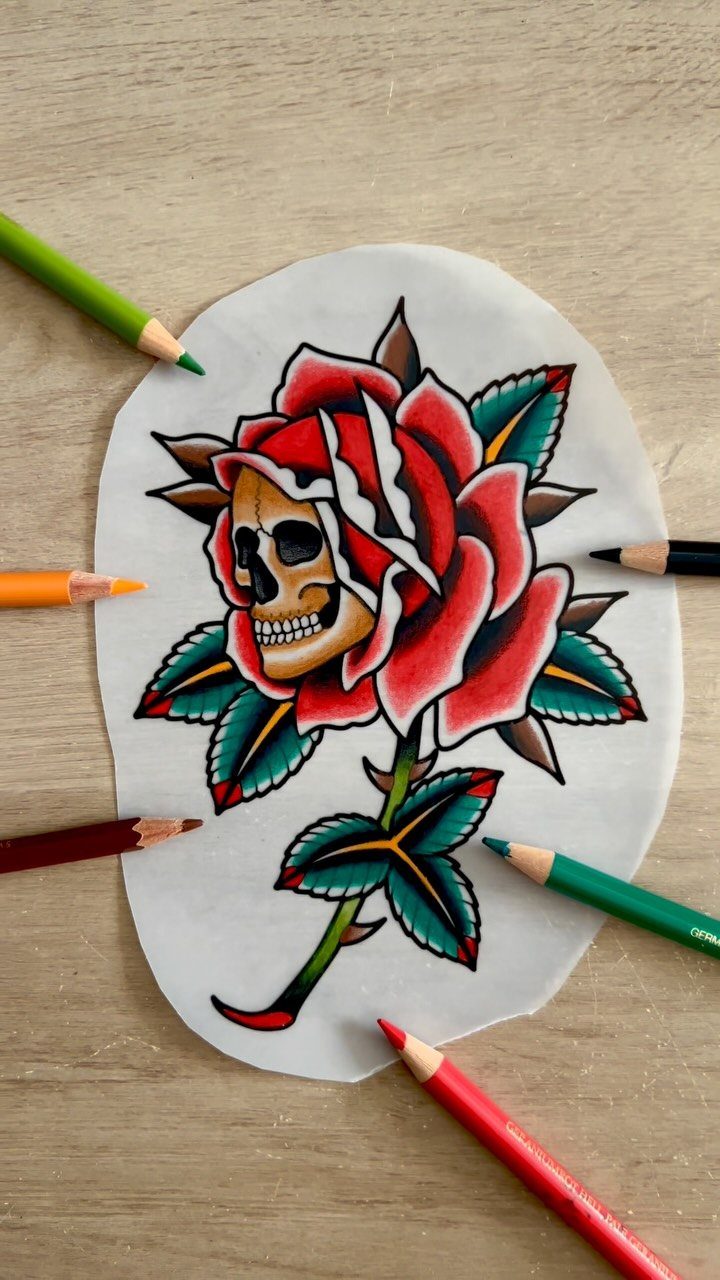
Integrating the skull into the rose structure rather than placing them side by side turns two separate symbols into one object. The petals wrap around the bone, and the green leaves anchor the composition.
Color work like this needs regular touch-ups as red fades faster than black. The rose-skull hybrid reads well at medium sizes where both elements stay visible, but if you go too small, the bone structure gets lost in the petals.
If you want a skull softened by flowers without keeping them separate, this approach gives you a tighter design that fits narrower placements like the inner forearm or outer calf.
10. Skull with Butterflies Tattoo
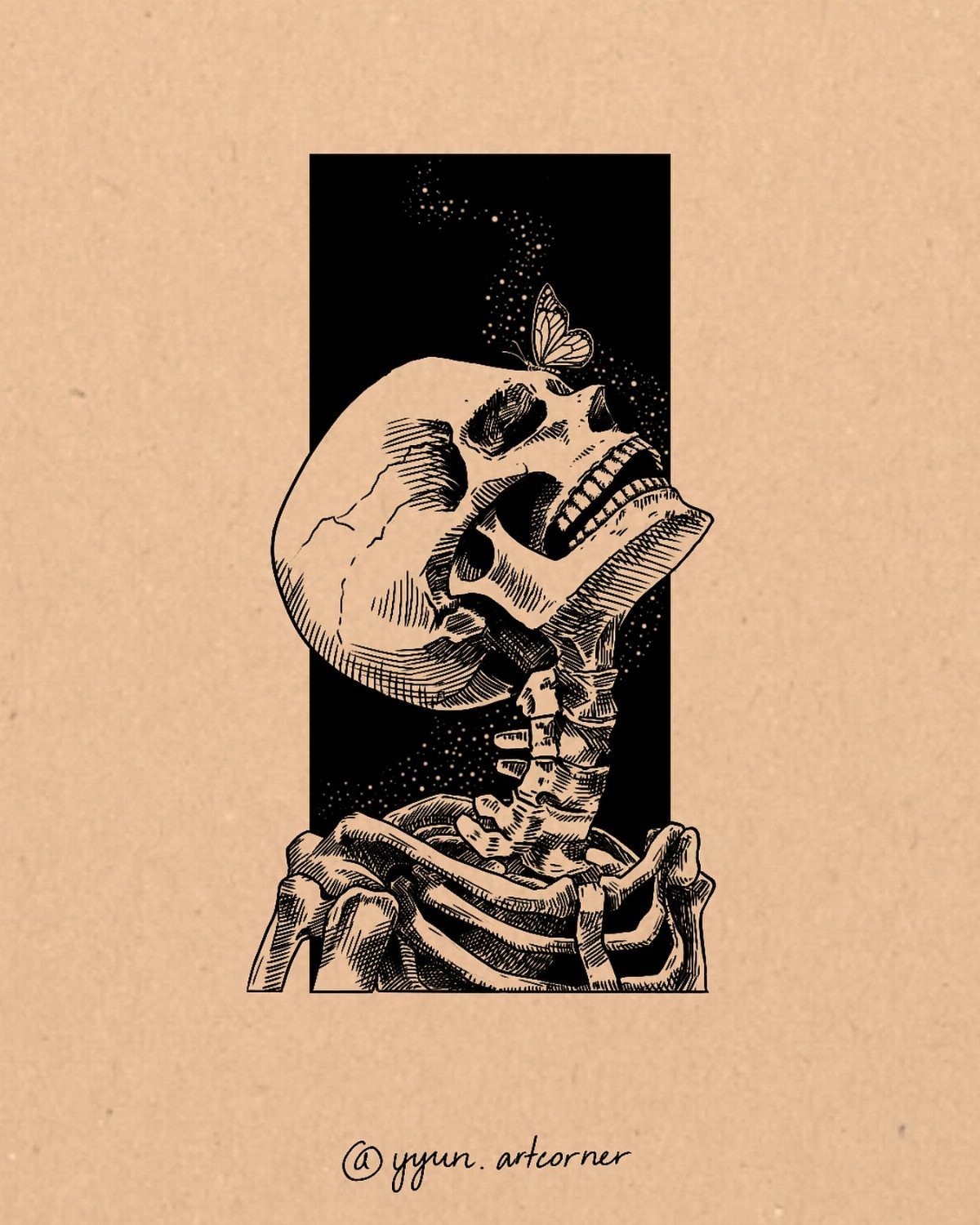
A single butterfly on the forehead keeps the skull as the main subject while adding a small counterpoint to the death imagery.
This composition works on the upper back or shoulder blade because the vertical spine needs space to run.
One butterfly reads as delicate rather than busy, and you could place it elsewhere on the skull or swap it for a moth if you want something nocturnal.
The minimal addition keeps the focus on bone structure without filling every open space.
11. Skull with Flames Tattoo
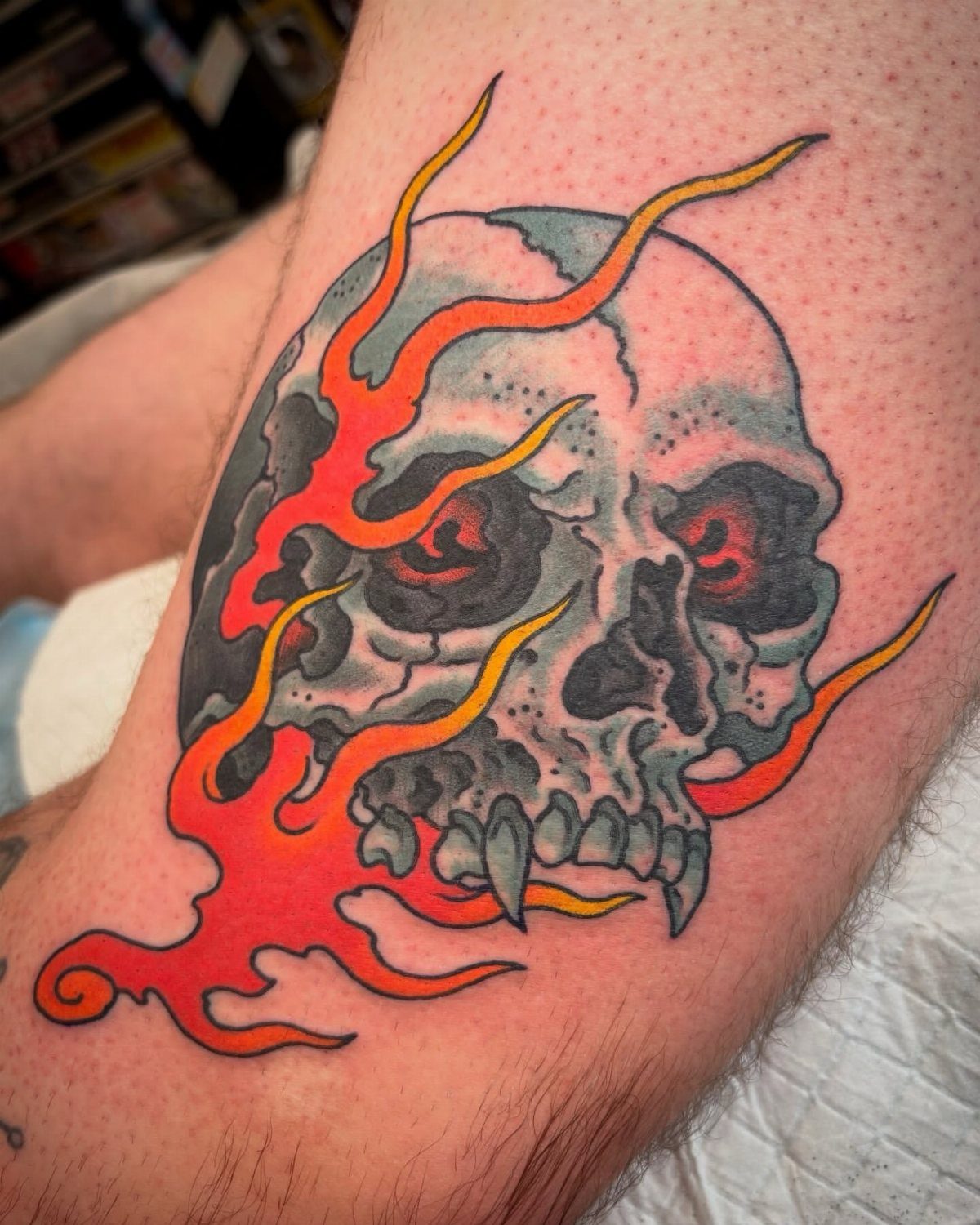
Flames around a skull suggest hell, destruction or a burning exit, and color brings the fire to life in ways grey wash can’t.
The orange and red gradient visible here needs multiple passes to layer properly, and the grey skull contrasts with the bright flames without competing for attention.
Colored flames fade faster than black ink, so touch-ups will keep the orange and red vivid. If you want a skull that looks like it’s actively burning rather than sitting still, color is worth the upkeep.
12. Skull with Dagger Tattoo
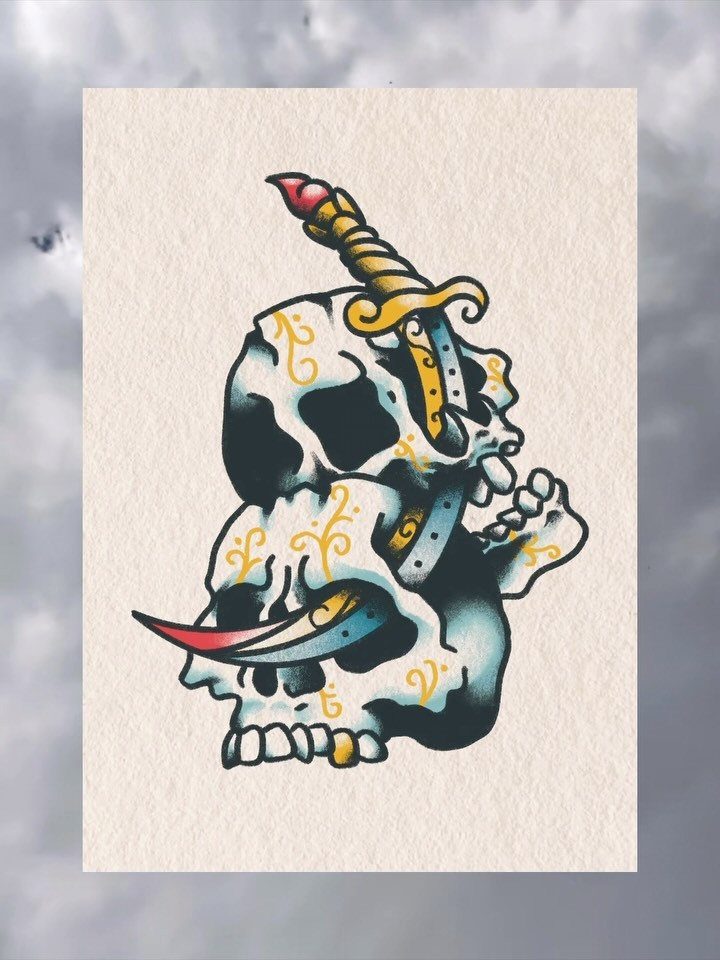
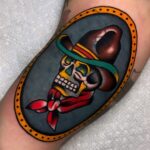
A dagger through the skull reads as betrayal, violence or a clean kill, and traditional tattoo style keeps the design bold with thick outlines and minimal shading.
The gold hilt and red accents add color without going full-color, and stacking 2 skulls fills vertical space on a forearm or shin.
Traditional style ages well because the heavy black outlines hold their shape as the ink spreads slightly over decades.
The dagger gives the composition a central line that guides the eye, and you can adjust the angle or add more decorative elements to the hilt if you want something less stark.
If you want a skull with clear violent symbolism, the pierced design does that without needing script or extra imagery.
Symbolism of Skull Tattoos
Skull tattoos carry mortality as their root meaning, but the way you frame the skull shifts what it says.
A bare skull alone reads as memento mori, a reminder that life ends. Add flowers, butterflies or candles and the piece leans toward the cycle rather than the endpoint: death feeding new growth, transformation following decay.
The skull as a memento mori—a reminder of mortality—shows up less often in modern Western tattooing, but the idea still sits under some designs where the skull faces outward rather than in profile.
Day of the Dead sugar skulls celebrate rather than mourn, turning the symbol into something closer to a family portrait than a warning.
Tips for Drawing Skulls
Skull drawings start with a sphere for the cranium and a smaller box for the jaw, then refine the proportions from there.
The eye sockets sit roughly halfway down the head, not higher, and the nasal cavity centers between them as an upside-down heart shape.
Teeth are the detail most beginners rush. Each tooth has width and slight variation in height, and the row curves with the jaw rather than sitting flat.
Shading under the cheekbones and inside the eye sockets gives the skull depth, and a light source from one side lets you build gradients that make bone look rounded instead of flat.
Weathered skulls add cracks, missing sections or heavy texture, but those details work better once the underlying structure holds. Get the proportions right first, then layer in damage or smoke effects.
Placement Ideas for Skull Tattoos
Arms handle skull tattoos at almost any size because the muscle curves support rounded shapes and you can orient the design vertically on the forearm or horizontally on the upper arm.
The outer forearm hurts less than the inner, and the skin there ages slower than hands or fingers.
Back and chest placements give you room for large compositions with multiple elements, but chest work over the sternum and ribs ranks among the more painful spots.
The upper back between the shoulder blades sits flatter and heals easier than the lower back near the spine.
Legs work well for vertical skulls with added figures like reapers or crowned skeletons.