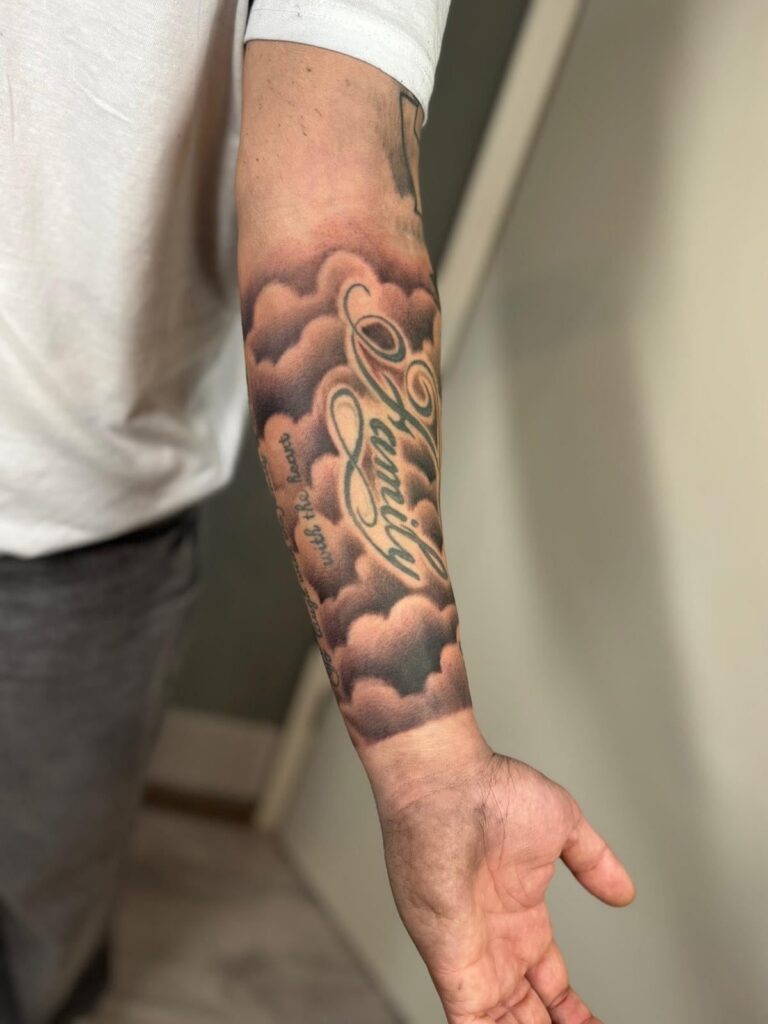
Traditional cloud filler with bold black outlines sits at the opposite end from storm clouds dense enough to darken a whole forearm, and Japanese clouds bring rounded shapes borrowed from woodblock prints.
Match traditional clouds to other traditional pieces and soft gradients to realism or portraits, because mismatched filler makes the gap between tattoos more obvious instead of less.
Japanese cloud filler borrows rounded, stacked shapes from ukiyo-e prints and uses thin wind bars to soften transitions, while layered fluffy clouds rely on stippled shading that takes more time in the chair but reads cleaner years later.
1. Traditional Cloud Filler
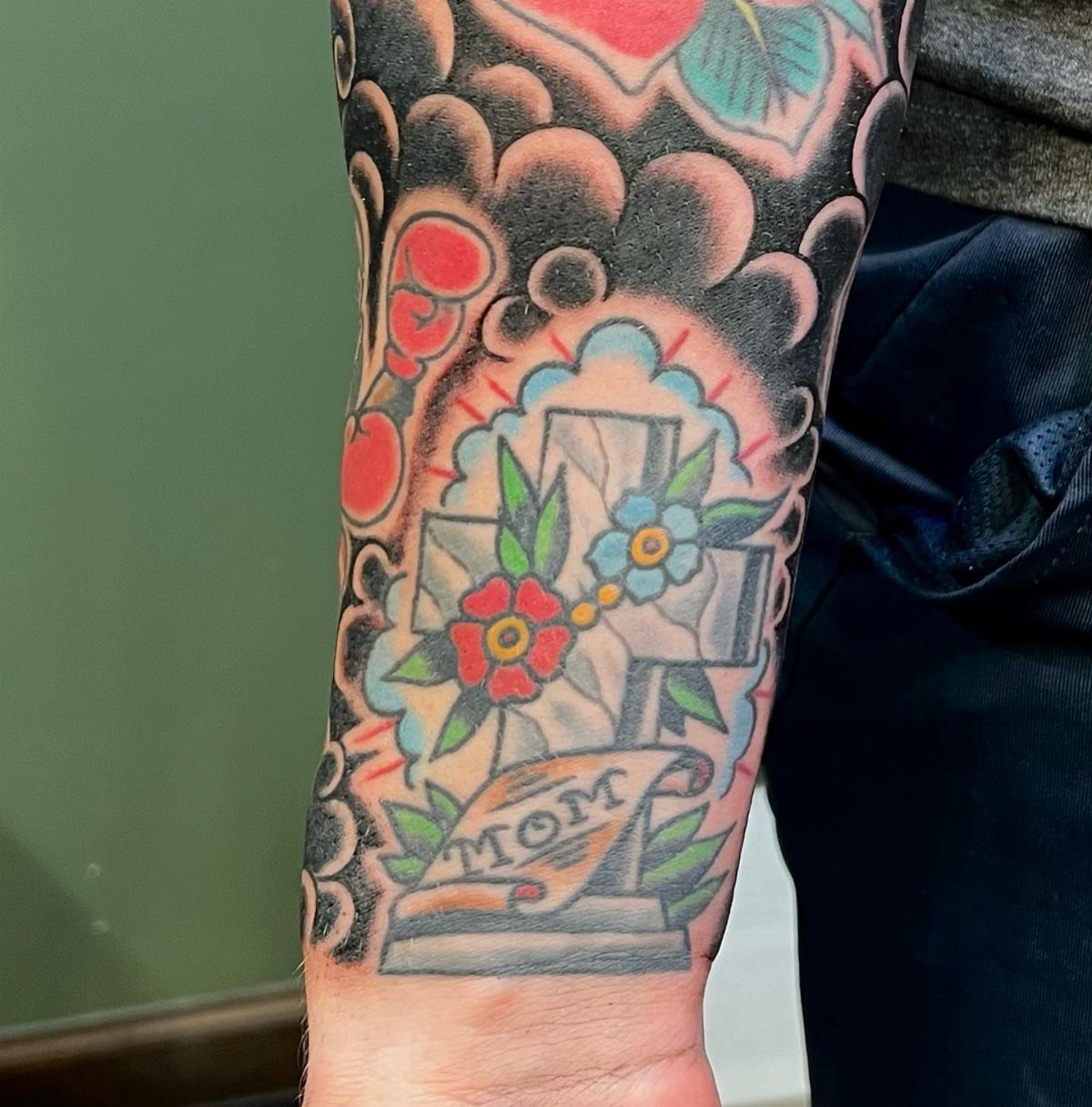
Traditional cloud filler uses bold black outlines and tight, stylized swirls that sit flat against the skin. The shapes curve and wrap around existing pieces without competing for attention.
This style reads cleanly from a distance and holds up over time because the thick lines stay sharp. It pairs well with other traditional work, matching the same high-contrast look and solid color blocks.
The clouds fill gaps quickly and give a forearm or leg sleeve a finished, cohesive feel without adding new focal points.
2. Japanese Cloud Filler
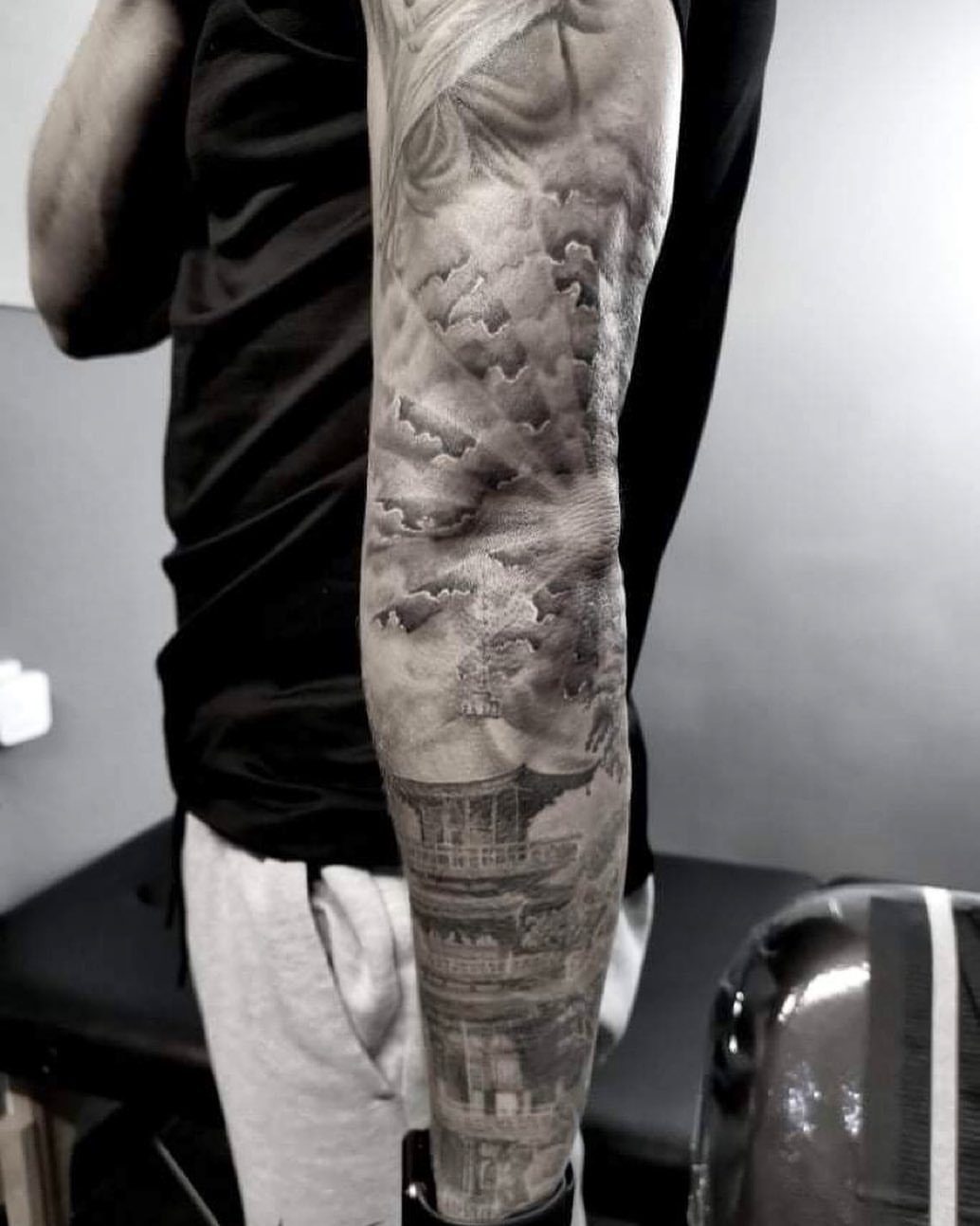
Japanese cloud filler borrows from ukiyo-e prints, with rounded, stacked shapes and soft gradients that roll across the skin. The clouds here frame architectural elements like pagodas or temples and connect separate images into one continuous scene.
Black and grey shading keeps the clouds subtle, letting the main subject hold focus. The style suits a half sleeve or full sleeve where multiple pieces need a unified background.
Artists often add thin wind bars or mist to soften transitions between the clouds and the skin. The result feels deliberate and balanced, not rushed to fill space.
3. Layered Fluffy Cloud Filler
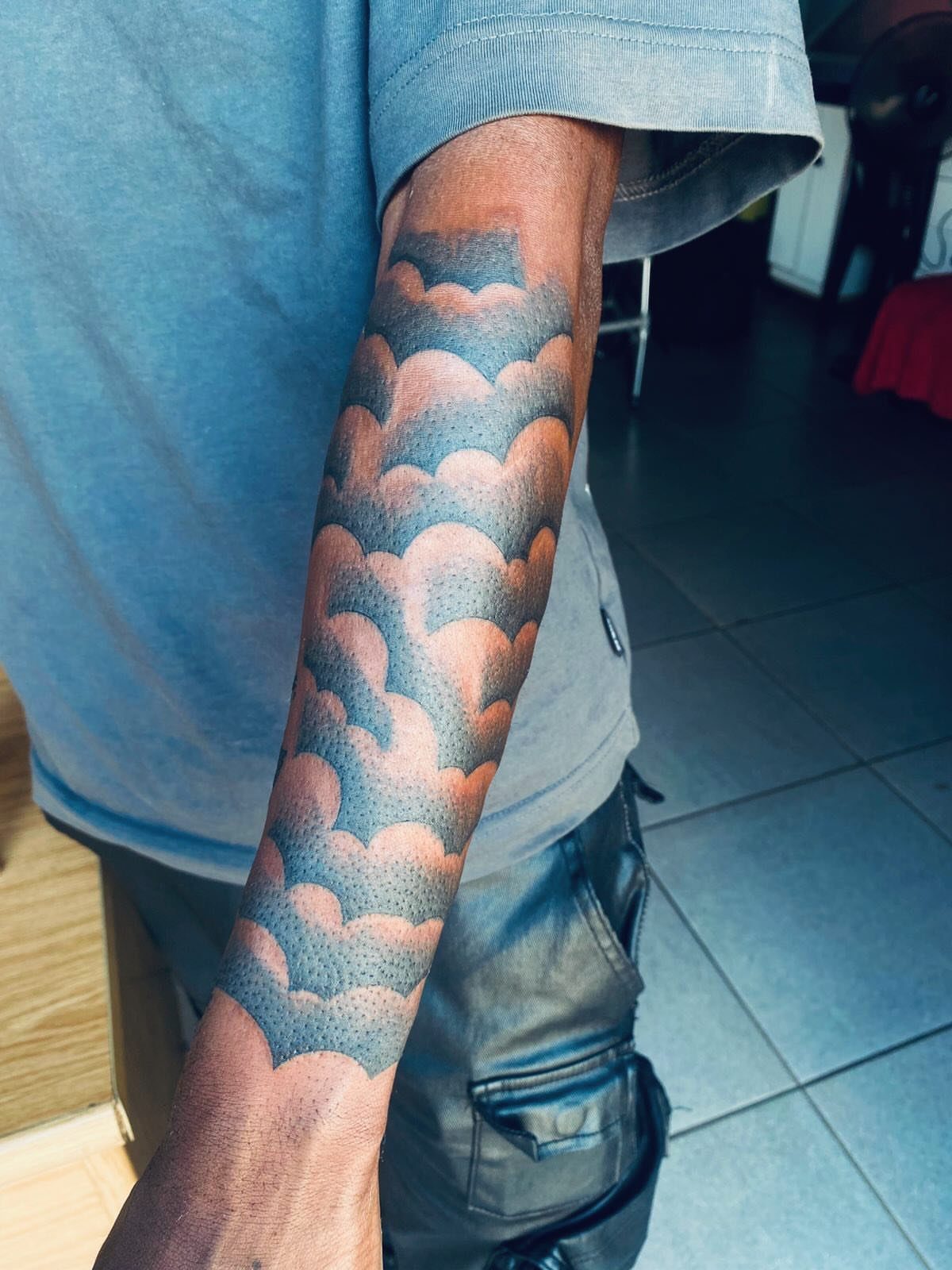
Layered fluffy clouds stack soft, rounded shapes with stippled shading that mimics depth and volume. The technique builds lighter tones in the center and darker edges, giving each cloud dimension without hard outlines.
This style works well when you want filler that stays gentle and doesn’t overpower delicate line work or script. It reads softer than bold traditional clouds and suits forearms, ribs or shoulders where the skin has natural curves.
The stippling takes time but ages well because there are no fine lines to blur.
4. Cloud Filler Tattoo Designs
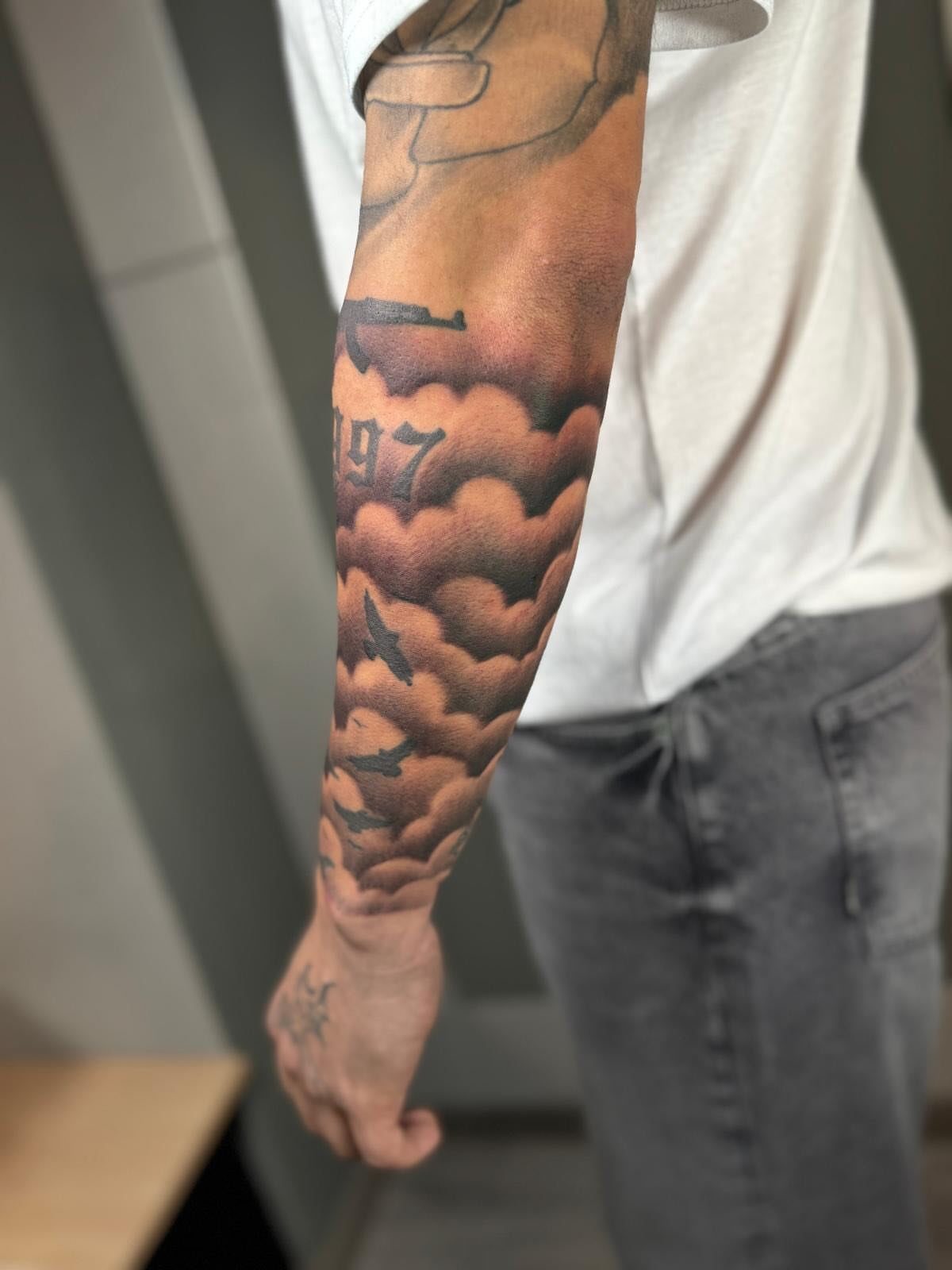
Cloud filler designs can hold more than just background. The clouds here wrap around numbers, birds and other small elements, turning dead space into a scene that tells a story.
Dense black and grey billowing shapes give the piece weight and contrast, especially when paired with thin line work or silhouettes.
Aircraft, birds or dates sit inside or above the clouds, and the whole composition reads as intentional rather than filled in later.
This approach suits people adding to an existing tattoo who want the filler to feel like part of the original plan.
5. Storm Cloud and Lightning Filler
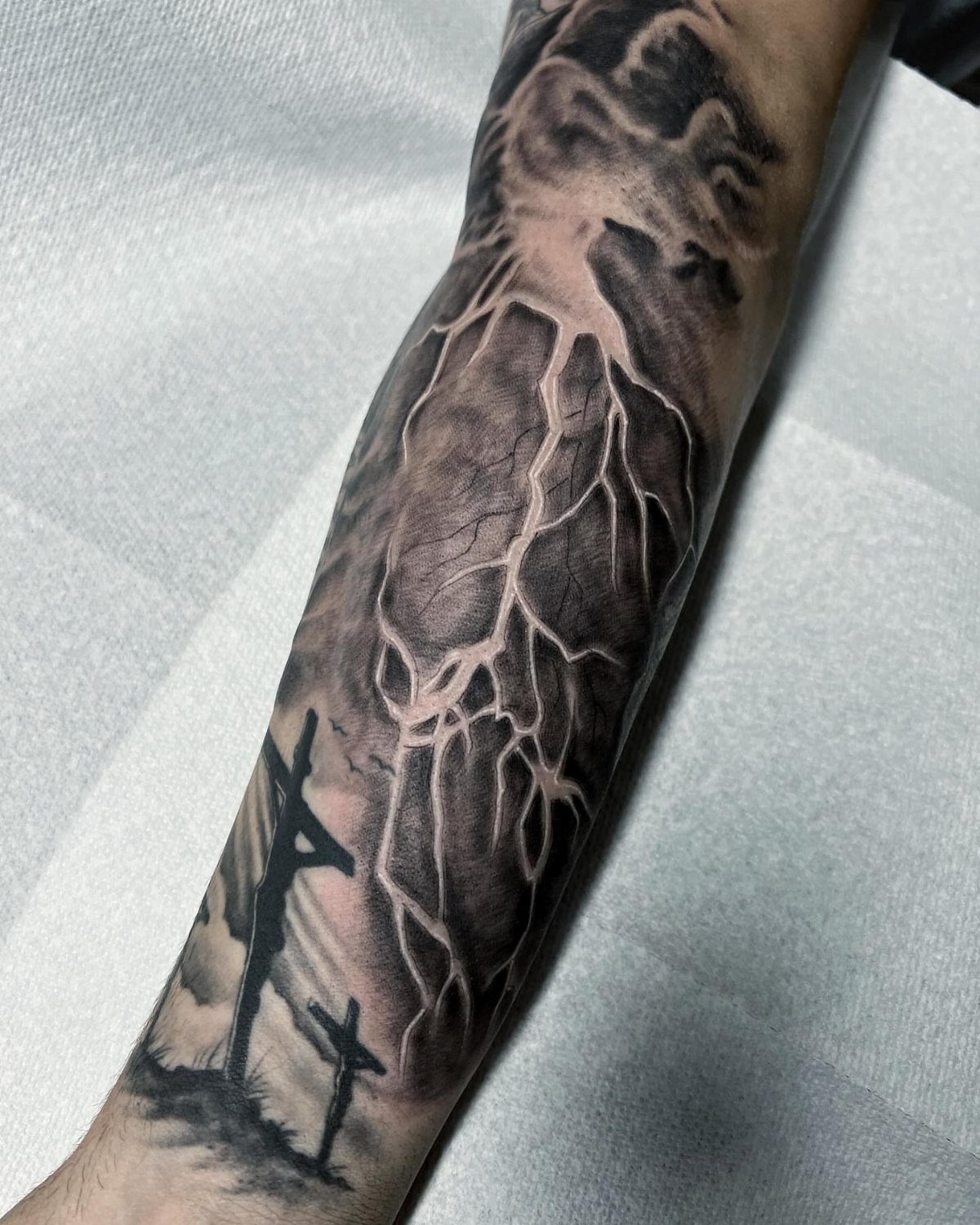
Storm clouds darken the background with heavy shading and sharp lightning bolts that cut through the negative space. The clouds here are dense and textured, giving a forearm or upper arm a moody, high-contrast finish.
Lightning adds movement and draws the eye without needing a separate focal point. The style pairs well with religious imagery like crosses or with other bold traditional pieces that can hold their own against the dark background.
Expect more time in the chair for the solid black packing and tight gradients that make storm clouds read correctly.
Meaning of Cloud Tattoos
Clouds in tattoo work carry meaning that goes beyond just filling space. They represent transition, change and the idea of something intangible made visible on skin.
The symbolism shifts depending on the style. Dark storm clouds suggest conflict or a turning point, while soft fluffy shapes lean toward peace or aspiration.
Artists often use clouds to signal that a piece is about memory or something that exists more in thought than in solid form.
When clouds surround other elements like portraits, dates or religious icons, they frame those subjects as elevated or set apart from everyday life. The filler becomes part of the meaning rather than just background.
This gives you flexibility: clouds can support an existing design without changing its message or add a layer of interpretation that makes the whole sleeve or piece feel more complete.
Filling Gaps in Tattoos
Gaps between tattoos on an arm or leg often happen when pieces are added over time without a plan for how they’ll sit together.
Clouds solve that problem by flowing around hard edges and filling the empty skin without introducing a new competing image.
Match the style of the existing work.
Traditional clouds with bold outlines sit next to other traditional pieces, while soft gradients pair better with realism or portraits. Mismatched filler makes the gap more obvious, not less.
Clouds also let you adjust coverage.
Dense black and grey shapes fill large areas quickly, while lighter stippled clouds can stretch to cover just a narrow strip between 2 pieces. The filler adapts to the space rather than forcing you to work around a rigid design.
Tattoo Design Techniques
Artists layer passes of diluted ink to control how smooth the transition reads on skin.